

November 4, 2026
Custom Tin Can Packaging Guide: Sizes, Lids & Printing Options
Considering custom tin can packaging for your product or limited-edition release? Here’s everything you need to know.
What Sizes Do Roastar Tin Cans Come In?
What Are Roastar’s Minimum Order Quantities for Tin Cans?
Lid Options: Plastic or Metal
Do I need a tin can seamer?
Direct-Print vs. Labeled Tin Cans: What’s the Difference?
What Are Direct-Print Tin Cans?
What Are Custom Labeled Tin Cans?
Which Tin Can Printing Option Should You Choose?
You May Also Like
Complete Guide to Custom-Printed Tin Cans
Custom-printed tin cans offer a durable packaging solution for everything from limited-edition releases to refill programs. Ideal for coffee, tea, nuts, candy, and pet treats, Roastar's custom tin can packaging is available in multiple sizes, lid styles, and printing options to fit your product and brand.
But which tin can options are right for you? This guide covers everything you need to know about Roastar's custom tin cans, including sizes, minimum order quantities, lids, closures, and the differences between direct-print and labeled tin cans.
What Sizes Do Roastar Tin Cans Come In?
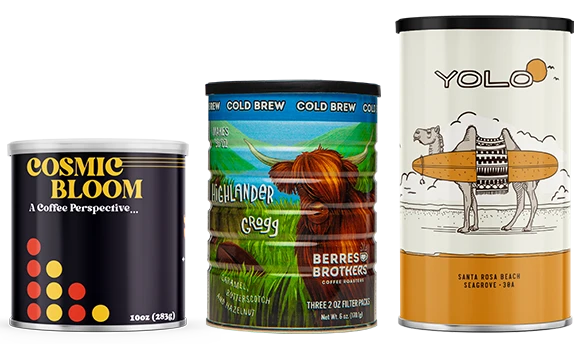 Roastar offers three custom tin can sizes, each with a different fill volume to accommodate a variety of products and packaging needs:
4-inch tin can: Holds approximately 6-8 oz. Available in beaded or straight styles.
5.5-inch tin can: Holds approximately 8-12 oz. Available in a beaded style only.
7-inch tin can: Holds approximately 10-16 oz. Available in beaded or straight styles.
These fill capacities are estimates based on whole coffee beans. Actual fill weight may vary depending on the type and density of the product being packaged.
What Are Roastar’s Minimum Order Quantities for Tin Cans?
Roastar’s minimum order quantity (MOQ) for custom tin cans is 50 cans for direct-printed orders, which can be split across multiple designs with a minimum of 10 cans per design, and 100 cans for labeled orders.
With Roastar Design Lab™, you can order as few as one custom direct-printed tin can and preview your design using a live 3D mockup before placing your order.
Lid Options: Plastic or Metal
Roastar offers two lid options for custom tin cans: plastic lids and metal lids.
Plastic Lids: Roastar’s plastic tin can lids are the best option for customers prioritizing a tight seal above everything else. Available in black or clear (hazy) finishes and made from Resin #2 plastic, these lids may not be accepted in curbside recycling programs. End users should check their local recycling guidelines for proper disposal. Roastar customers can also apply their own circular label to the lid to display additional product information or branding.
Metal Lids: Roastar’s metal tin can lids offer many great advantages, but do not seal as tightly as plastic lids. Made of tin-coated steel, they offer a premium look, and when paired with the tin can, they are curbside recyclable (pro tip: recycle with the metal lid attached to ensure proper disposal). Many of our customers also apply their own magnetic labels to metal lids, creating a collectible keepsake.
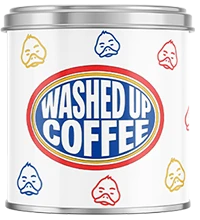
Whichever lid option you choose, Roastar offers free downloadable disposal logos to add to your custom tin can artwork. These logos help communicate proper disposal and recycling instructions for both the tin can and its lid.
Do I need a tin can seamer?
Whether you need a tin can seamer depends on the closure option you choose. Roastar offers two valved end options for custom tin cans: traditional valved ends that require a seamer and peel & stick closures that can be applied by hand.
Valved End – Seamer Required: Roastar’s traditional valved ends are made from aluminum and feature a pull-tab opening and a degassing valve. Tin cans arrive with a raw edge, and the valved end must be attached using a tin can seamer after the product is filled. Need to rent a seamer? Contact us.
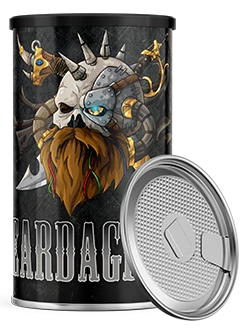
Valved End – Peel & Stick: Roastar’s peel & stick closures eliminate the need to purchase or rent a tin can seamer. Tin cans arrive with a pre-seamed metal ring, allowing you to hand-apply the closure after filling. Each closure features a degassing valve, an easy-open pull tab, and a strong, resealable adhesive to help maintain product freshness. This is an excellent option for coffee bean refill programs since the peel and stick allows the tin can to be repeatedly reused, increasing its sustainability benefits.
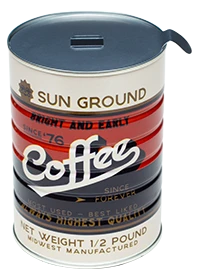
Direct-Print vs. Labeled Tin Cans: What’s the Difference?
Custom labeled tin cans and direct-print tin cans each offer distinct advantages for custom coffee packaging, depending on your priorities for branding, print quality, order quantity, turnaround time, and budget.
What Are Direct-Print Tin Cans?
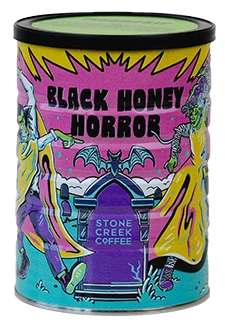 Direct-print tin cans feature your design printed directly onto the metal surface instead of a label. This creates an integrated look that works especially well on ribbed or beaded 5.5" tin cans, where direct print tends to perform best visually. Note that only a gloss finish is available for this printing type.
Benefits of Direct-Print Tin Cans
Typically faster turnaround times than labeled options.
Custom orders start at 50 cans and can be split into as few as 10 per design, offering greater flexibility for testing new SKUs or producing smaller runs. Direct-print tin cans also be a strong choice for designs that use metallic effects, since the natural tin surface becomes part of the finished look.
Through Roastar Design Lab™, you can order as few as one custom tin can with a clear lid and preview your design using a live 3D rendering. Design Lab cans come pre-seamed and include a peel and stick valved end to preserve coffee freshness.
Because the artwork is printed directly onto the can, the edge of the design aligns with the seam, making the ridge less noticeable than it would be on a labeled can.

Limitations of Direct-Print Tin Cans
Direct-print is less suited for large solid blocks of color or designs where color-matching is important, as slight variations in ink coverage can occur and color matching isn’t guaranteed.
Direct-print is also less suitable for finely detailed designs, as it produces a lower print resolution than labels and a textured look. Colors may bleed into surrounding areas, resulting in less defined text and lines.
For direct-print tin cans, Roastar requires a physical proof to be ordered and approved in advance to ensure your design looks as you expect.
What Are Custom Labeled Tin Cans?
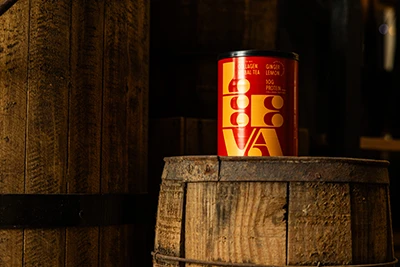 Labeled tin cans use a professionally printed label applied to the surface of the can. This option delivers print quality similar to flexible coffee bags, making it a strong choice for coffee brands that want more precise color matching across their packaging, including bags and custom labels.
Benefits of Labeled Tin Cans
Well suited for intricate artwork, small text, detailed graphics, and large solid areas of color.
Ability to have precise color matching across products and designs.
At higher order volumes, they are more cost-effective than direct-print options.
More material and finish choices: White or metallic label in either a matte or gloss finish.
Limitations of Labeled Tin Cans
The label cannot be aligned with the can seam, and a small ridge will be visible at some point around the can. Depending on the artwork and can style, this ridge may be more noticeable than it is with direct printing.
Labeled tin cans are not currently available in Roastar Design Lab™.
Minimum order quantity is higher than direct print at 100 cans per design.
Which Tin Can Printing Option Should You Choose?
The best printing method for your custom tin cans depends on your order quantity, artwork, budget, and branding needs.
Choose direct-print tin cans if you're looking for smaller minimum order quantities, faster turnaround times, or a more integrated look that takes advantage of the natural metal surface. Direct printing is particularly useful for limited-edition releases and brands testing new products.
Choose labeled tin cans if your artwork includes intricate details, small text, large areas of solid color, or precise branding requirements. Labeled cans also offer more finish options and can be more cost-effective for larger orders.
Still undecided? Ordering a tin can sample pack is a great way to compare the printing methods, materials, and finishes before committing to a full order.
Have more questions? Contact us — our knowledgable customer service team is available to help at every step of the way.
Stay in the know—subscribe to Roastar emails for product updates, special offers, packaging tips, and design inspiration.